The most expensive tool on a fiber build isn't the bucket truck. It's the paperwork.
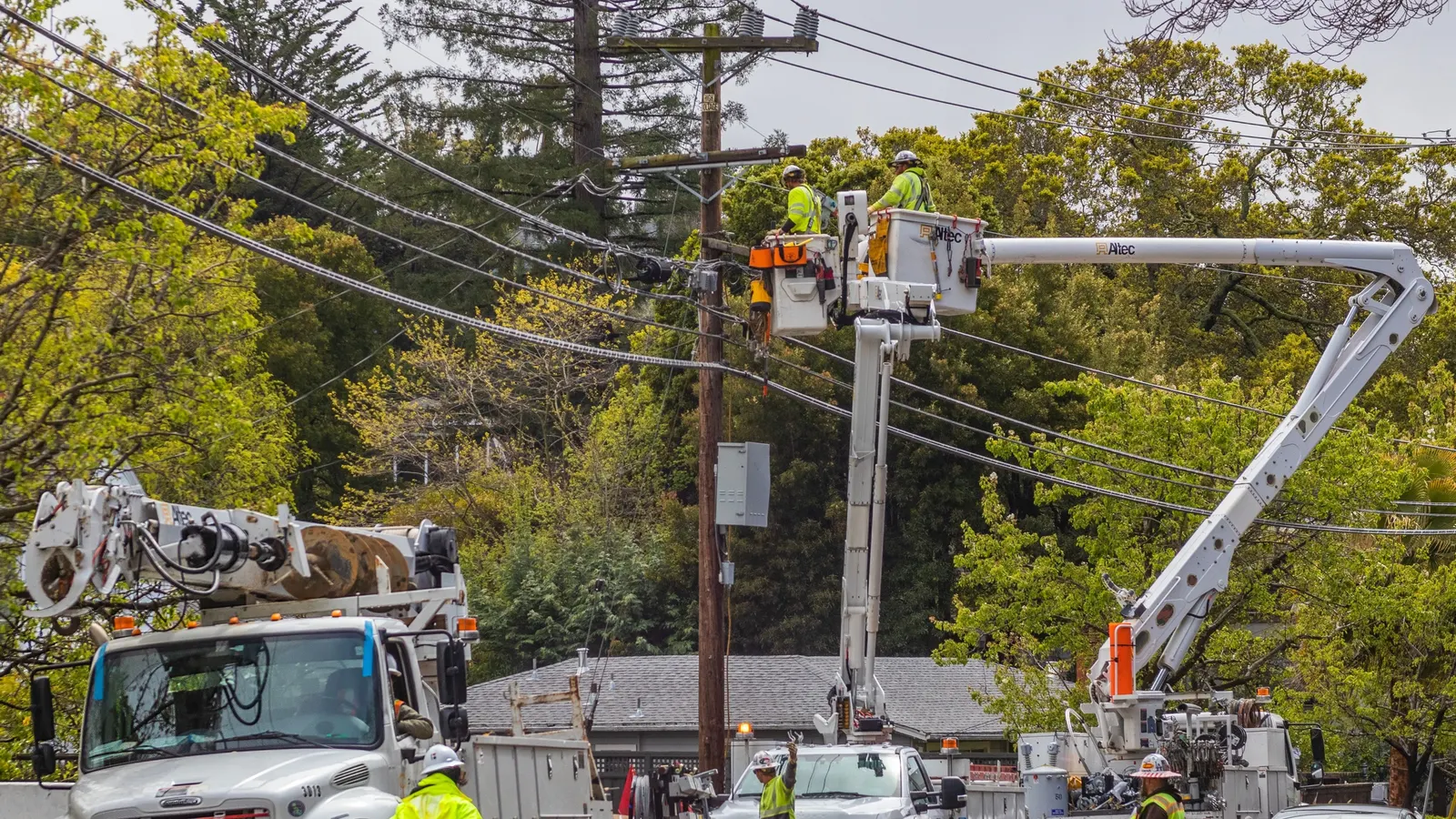
Every aerial crew I've worked with can tell you the footage they put up on any given day. The harder part is keeping that number accurately and promptly recorded from field to final as-built. It usually ends up split across a paper daily sheet, a group text of pole photos, a foreman's notebook of tick marks, a spreadsheet in the office, and a PDF redline someone has to reconcile, costing hours of labor to close out jobs.
That's the "file system" most telecom contractors run on. It's costing us more than we admit.
The industry is building faster than its records can keep up
The build pace is real. According to the Fiber Broadband Association's annual deployment survey, fiber reached 11.8 million U.S. homes passed in 2025 alone, and fiber now passes over 60% of U.S. households and could overtake cable as the dominant platform as early as 2028. Even so, 60 million potential first-time fiber passings remain to be built.
The people building it struggle to keep deadlines while also having to waste precious time tracking down old information due to multi-platform workflows. A study commissioned by FBA and the Power & Communication Contractors Association found that 28,000 more broadband construction workers and 30,000 more technicians are needed immediately to execute planned federal and state funding. FBA's Deborah Kish warned that without the workforce, bottlenecks "will choke and slow broadband deployment processes in unanticipated ways." There are roughly 129,000 people building broadband in the U.S. today. Give each of them back one hour a week from paperwork, and the industry gains the equivalent of about 3,000 full-time workers without recruiting a single new hire. Pair that with innovative young workers being taught by experienced professionals, and broadband can continue building more steadily.
When you're short on crews, every hour your supervisors spend chasing paper is an hour they aren't running work.
Headache number 1: The same footage gets entered three or four times
A foreman writes production on a daily sheet. Someone in the office types it into a spreadsheet. A PM retypes it into the customer's billing format. Then someone keys it into payroll to split crew pay. Each handoff is a chance for a transposed number or a wrong unit code.
The broader construction data shows what that costs. Autodesk and FMI surveyed more than 3,900 construction professionals and estimated that "bad data" (inaccurate, incomplete, inaccessible, inconsistent or untimely) may have cost the global industry $1.85 trillion in 2020. Thirty percent of respondents said more than half of their project data is bad. FMI put it in contractor terms: for a contractor with $1 billion in revenue, that's $7.1 million in avoidable rework tied to bad data.
Headache number 2: Your best people spend their week looking for things
The PlanGrid/FMI Construction Disconnected study is still the clearest picture of where field leadership time goes. Construction professionals spend 35% of their time, more than 14 hours a week, on non-optimal activities. Of those hours, 5.5 go to chasing project information, 4.7 to conflict resolution, and 3.9 to mistakes and rework. The same research found that on average 48% of all rework in U.S. construction is caused by poor data and miscommunication.
In our world, that's the supervisor calling three foremen to figure out which spans got overlashed on which day, or the office matching photos to poles because the pictures came in with no pole number, no date, and no footage attached.
Bluebeam summed up these failures well: "they don't present as failures. They look like Tuesday."
Headache number 3: "Going digital" often means you have more places to lose things
Most contractors will tell you they're digital already. We have spreadsheets, Smartsheets, Adobe Acrobat, shared drives, and cloud folders. The trouble is that none of these systems talk to each other. Bluebeam's AEC Technology Outlook 2026 found only 11% of AEC firms are fully digital across all project phases, with the rest still relying on paper, spreadsheets and legacy tools, especially in the field and at closeout. In the same survey, 23% named integration complexity as their top barrier to adoption, ahead of cost, time, and leadership buy-in.
Five apps that don't share data aren't a system. They're five filing cabinets with passwords.
Headache number 4: Closeout turns into a scavenger hunt
As-builts, redlines, splice records, test results, permit sign-offs, and photo documentation all get assembled at the end of the job, usually weeks after anyone remembers the details. When closeout documentation is poorly organized or incomplete, handover takes longer, final payments get delayed, and retainage stays tied up.
The stakes go up on grant-funded work. BEAD subgrantees have to prove to state broadband offices that the funded network was built as proposed, which means matching as-builts, tested fiber records, photo documentation, permit sign-offs, and a complete change order log. An as-built that was assembled from memory is the one that gets kicked back.
Headache number 5: Messy records mean slow money
This is the one that keeps owners up at night. Every billing dispute over footage, every invoice held because the backup documentation doesn't line up, pushes cash further out. The industry already runs on thin cash flow. Billd's 2025 National Subcontractor Market Report found subcontractors waited 56 days on average to be paid, while GCs believed payment went out after 30 days. Rabbet's 2025 Construction Payments Report estimates slow payment costs U.S. construction $299 billion, and 82% of contractors reported work delayed or stopped because of a payment delay.
Not all of that is a paperwork problem. But clean, approved, timestamped production records remove the easiest excuse anyone upstream has for holding your invoice.
What better looks like
The fix isn't another app on the foreman's phone. It's one record of the day's work that everything else flows from:
- Capture it once, in the field. Footage, unit codes, and photos get entered once, tied to the actual pole or span, even with no cell signal.
- Approve it once. A supervisor signs off, and the record is locked. No one edits approved production after the fact.
- Let billing and crew pay read from it. Invoices and pay splits come from the same approved record, so there's nothing to retype.
- Build the closeout package as you go. Don't reconstruct it at the end of the job.
The industry is being asked to build more fiber than ever, with fewer crews than it needs, on margins that don't leave room for waste. We can't recruit our way out of the paperwork problem. We have to stop creating it.
How is your company handling daily production and as-builts right now? I'd genuinely like to hear what's working, and what isn't.
Sources
- Autodesk. (2021, September 14). Study from Autodesk and FMI finds better data strategies could save the global construction industry $1.85 trillion. Digital Builder.
- FMI. Harnessing the data advantage in engineering and construction.
- Symetri. Embracing connected data in the construction industry.
- Corpay. How long does a contractor have to pay a subcontractor? The subcontractor payment timeline explained. Retrieved September 23, 2026.
- Draftech International. Fiber construction management services. Retrieved September 23, 2026.
- Fiber Broadband Association. (2025, December 16). Fiber Broadband Association reports historic fiber deployment highs.
- Fierce Network. US short about 58,000 tradespeople to deploy broadband.
- Inside Towers. (2024, August). Fiber buildout to face worker shortages.
- Kalman, F. (2026, August 19). Nobody budgets for the 40-minute drawing hunt. Built: The Bluebeam Blog.
- Track3D. (2026, May 29). Construction project closeout documents.